The glamorous world of cosmetic dentistry and influencer marketing often means that many patients assume that once their clear aligner treatment is complete, their teeth will be straighter and whiter. In reality, clear aligner treatment does not address staining or discolouration. From a patient’s perspective, if whitening is only discussed at the end of treatment, it can feel like an unexpected extra and one they had not planned for financially or logistically.
From a clinical perspective, professional whitening is a logical next step and supplementary treatment. By introducing whitening as part of their clear aligner treatment from the beginning and presenting it to patients as a way to enhance their results rather than as an optional extra, clinicians can manage expectations, avoid last-minute objections, and ensure patients achieve the final result they had in mind.
Introducing whitening early and meeting expectations
The most effective time to discuss whitening is at the initial consultation, not after aligner treatment is complete. Patients should be asked early on how they feel about the colour of their teeth. Some may not have considered professional whitening before, but once it is raised in the context of achieving an overall aesthetic outcome, they often recognise its value.
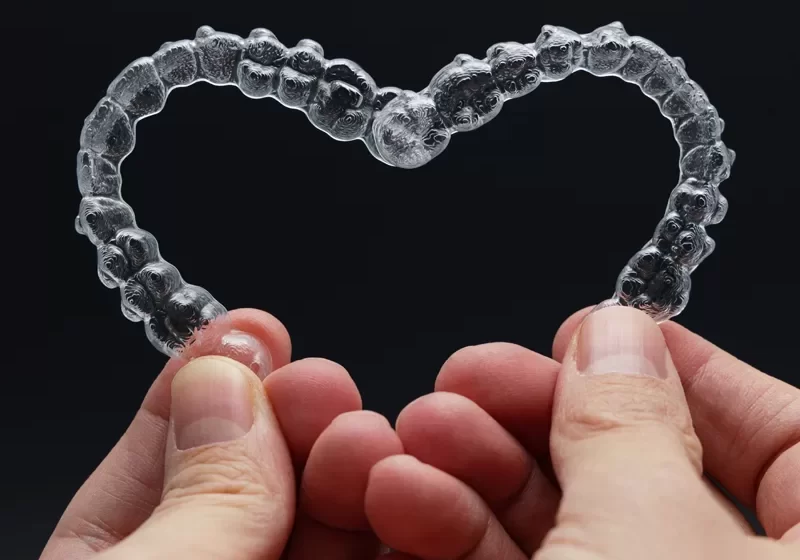
Patients undergoing clear aligner treatment have a significant advantage when it comes to teeth whitening. Their trays can be used to apply whitening gel during treatment, making the process seamless and convenient. When whitening is introduced initially, patients see it as a standard part of their treatment rather than an optional add-on. However, patients must understand that whitening does not provide instant or uniform results. Factors such as enamel structure, diet and previous staining will influence the outcome.
Photographic records and shade guides help patients visualise their progress and set realistic expectations. Encouraging them to take their pre-treatment photos can also provide a helpful reference, as gradual changes may be challenging to notice daily.
Aligners can also contribute to staining if not cleaned properly. Patients who consume coffee, tea, or red wine must be advised that aligners can trap staining agents against the teeth for prolonged periods. Without proper hygiene and whitening as part of their treatment, they may finish with teeth that are straighter but not necessarily brighter.
Incorporating whitening into the treatment package
Whitening should be presented as a natural extension of aligner treatment rather than a separate procedure. Offering a comprehensive smile package that includes whitening ensures patients see it as part of their overall transformation rather than an additional cost.
Now, introducing Pola for Aligners from SDI is an ever-easier way to position whitening as a standard part of aligner treatment rather than an optional extra. The result is that it becomes a natural and ‘less sales’ part of the treatment process.
Specifically formulated for compatibility with any aligner system, Pola for Aligners provides a straightforward whitening solution for aligner patients, working within their existing trays without needing separate appointments or additional custom trays. Available in Pola Night 10% carbamide peroxide gel, this take-home whitening solution enables patients to customise use between meals for just a couple of hours daily for the convenience of overnight wear.
For clinicians, integrating whitening into the treatment journey rather than introducing it at the end improves case acceptance and avoids difficult discussions around unexpected costs.
Once treatment is complete, patients transition from aligners to retainers, which can also be used for whitening. At their retainer check-up, a take-home top-up whitening kit ensures patients maintain their results over time. Dietary habits and natural enamel characteristics will continue to affect tooth colour, so patients should be advised on simple maintenance strategies. Offering professional whitening gel as part of their aftercare plan allows them to keep their smile bright without needing additional appointments.
Conclusion: The case for straightening and whitening together
Whitening and aligner treatment should not be viewed as separate procedures but as two essential steps in achieving the final smile patients expect. Addressing tooth colour during the early stages of treatment allows patients to complete their journey with straighter and brighter teeth, eliminating the frustration of unexpected costs or additional appointments.
From a business perspective, integrating whitening into the aligner treatment through a professional and trusted solution such as Pola for Aligners benefits the clinician and the patient. Patients appreciate a straightforward, predictable approach that includes everything they need to achieve their desired results.
This approach improves case completion rates for clinicians and adds an additional revenue stream without requiring separate appointments or additional chairtime.
By combining aligner treatment and whitening simultaneously through Pola for Aligners, clinicians can provide a streamlined, cost-effective, and time-efficient solution that meets patient expectations while maximising the value of every treatment case.
To learn more about Pola Whitening and Pola for Aligners, visit sdidental.co.uk.