
Accreditation course
Active Aligners Accreditation Course
Everything you need to start offering clear aligners with confidence, taught by our Clinical Director Dan Shaffer.
Press play
There is nothing to fill in first and no account to create. The course starts straight away.
Watch the course
Five short sections, under an hour in total. Stop and come back whenever you like.
Request your certificate
At the end the video takes you to a short CPD request form. Fill it in and your certificate follows within 72 hours.
Watch the course
Press play to start. At the end the video takes you to the CPD request form for your certificate.
Would you rather we sent it to you?
You can press play right now, nothing needs filling in first. But if you would sooner watch it later, or the video will not run on your device, leave your name and email here and I will send you the link and make sure your certificate follows. I read these myself.
What the course covers
Five sections, under 60 minutes in total.
Introduction to clear aligner therapies
Where clear aligners fit in general practice, and what they can and cannot do.
The digital platform
The workflow end to end, from scan or impression through to your treatment plan.
Patient treatment
Taking a case from consultation to fit, and what to tell the patient at each stage.
Clinical considerations
Case selection, the cases worth taking on, and the ones best avoided.
Patient cases
Real treated cases walked through, including what we would do differently.
Got your certificate? Find your first case
Accreditation is the easy part. The bit that actually changes your week is the first case going in. You do not need a complicated one to start, and you will not be doing it on your own: you plan it with us, a named person on our UK team helps you upload it, and Dan mentors anything tricky.
Your first case is half price. If you are not sure which patient to pick, reply to any of our emails and we will help you choose one.
Start your first case at half price
Choosing your first patient. These are the ones worth reading before you decide:
Course handouts
The slides from the course, grouped by presentation. Open a section to see its slides.
Clinical PhotographyTaking the records we need to plan a case properly. 5 slides.
 Slide 1Intra-oral and extra-oral photos
 Slide 2Taking extra-oral photos
 Slide 3Taking intra-oral photos
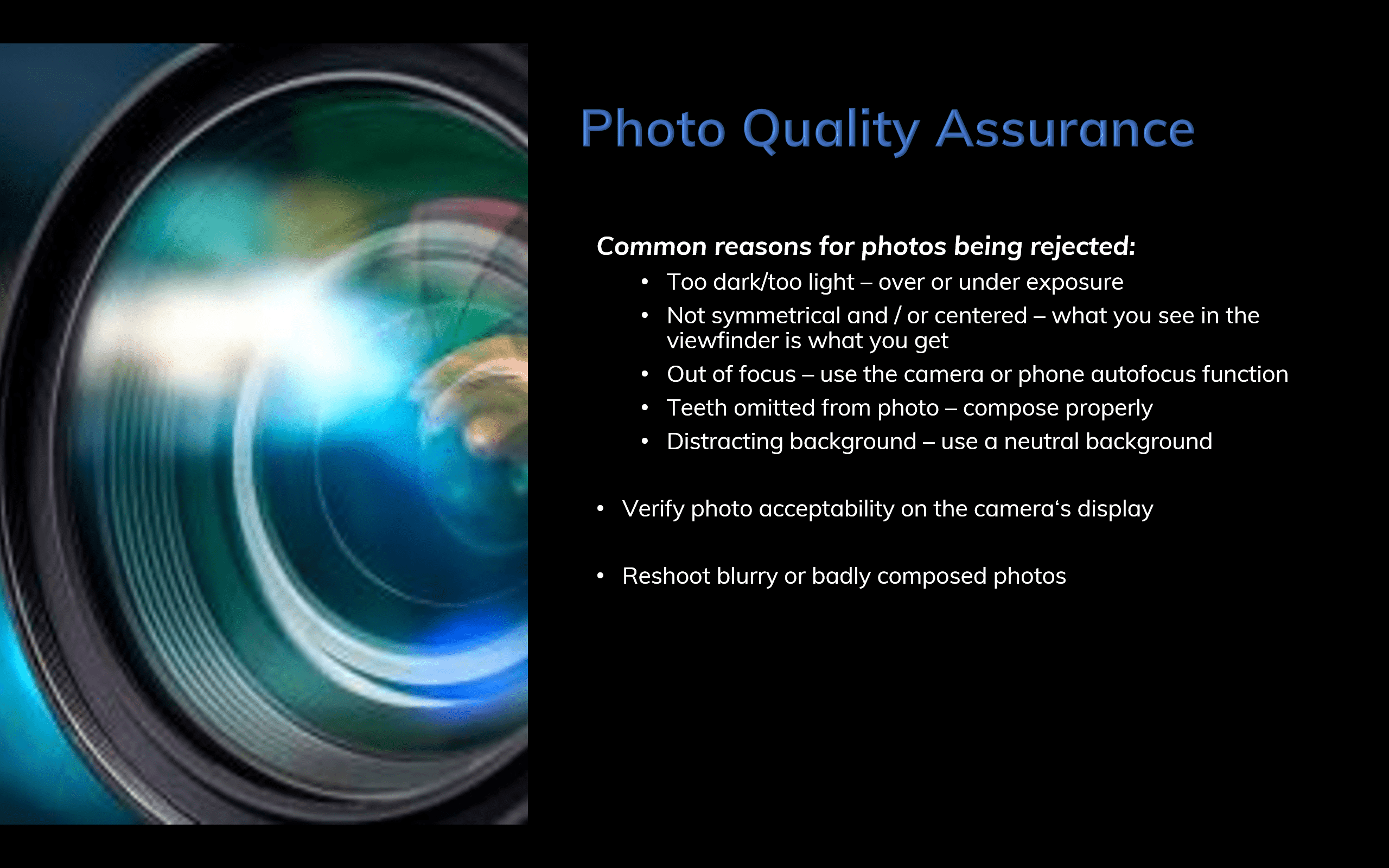 Slide 4Photo quality assurance
 Slide 5Photographic do’s and don’ts
Interproximal Reduction (IPR)Creating space safely, from assessment through to polishing. 16 slides.
 Slide 6Interproximal reduction
 Slide 7What this section covers
 Slide 8What is interproximal reduction?
 Slide 9Evolution of IPR
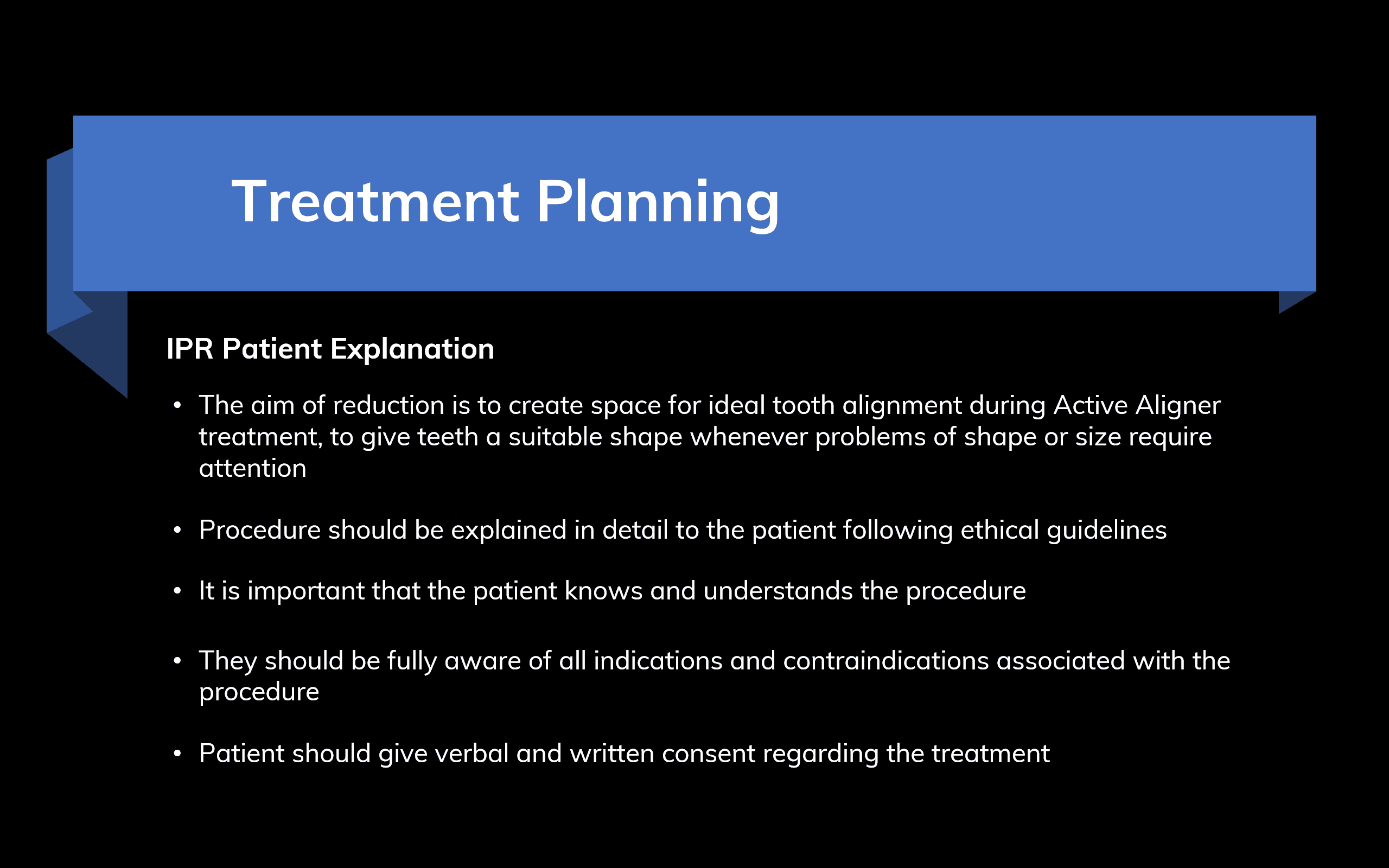 Slide 10Treatment planning: explaining IPR to the patient
 Slide 11Smile Summary example
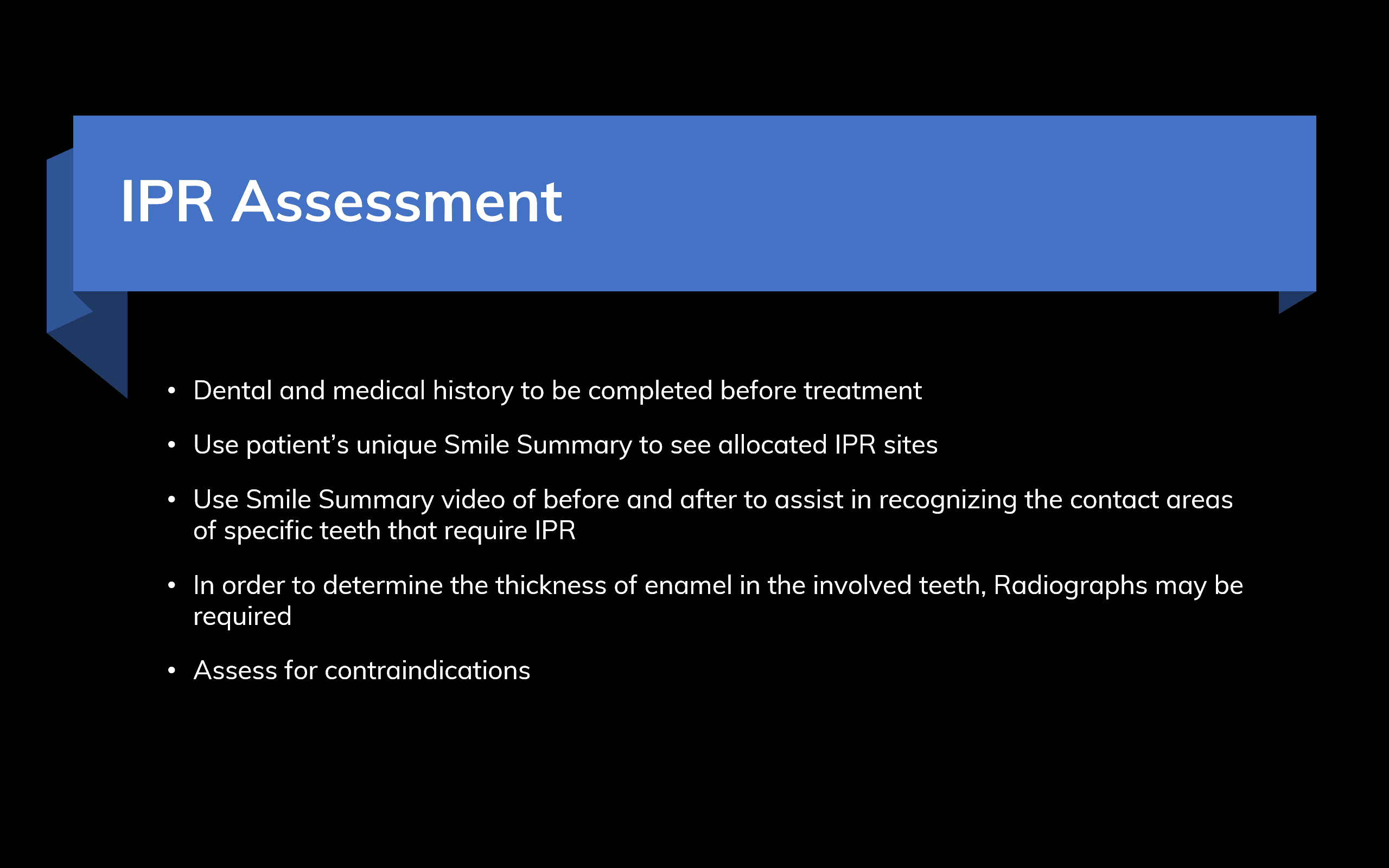 Slide 12IPR assessment
 Slide 13Indications and contraindications
 Slide 14Risk management: hard and soft tissue
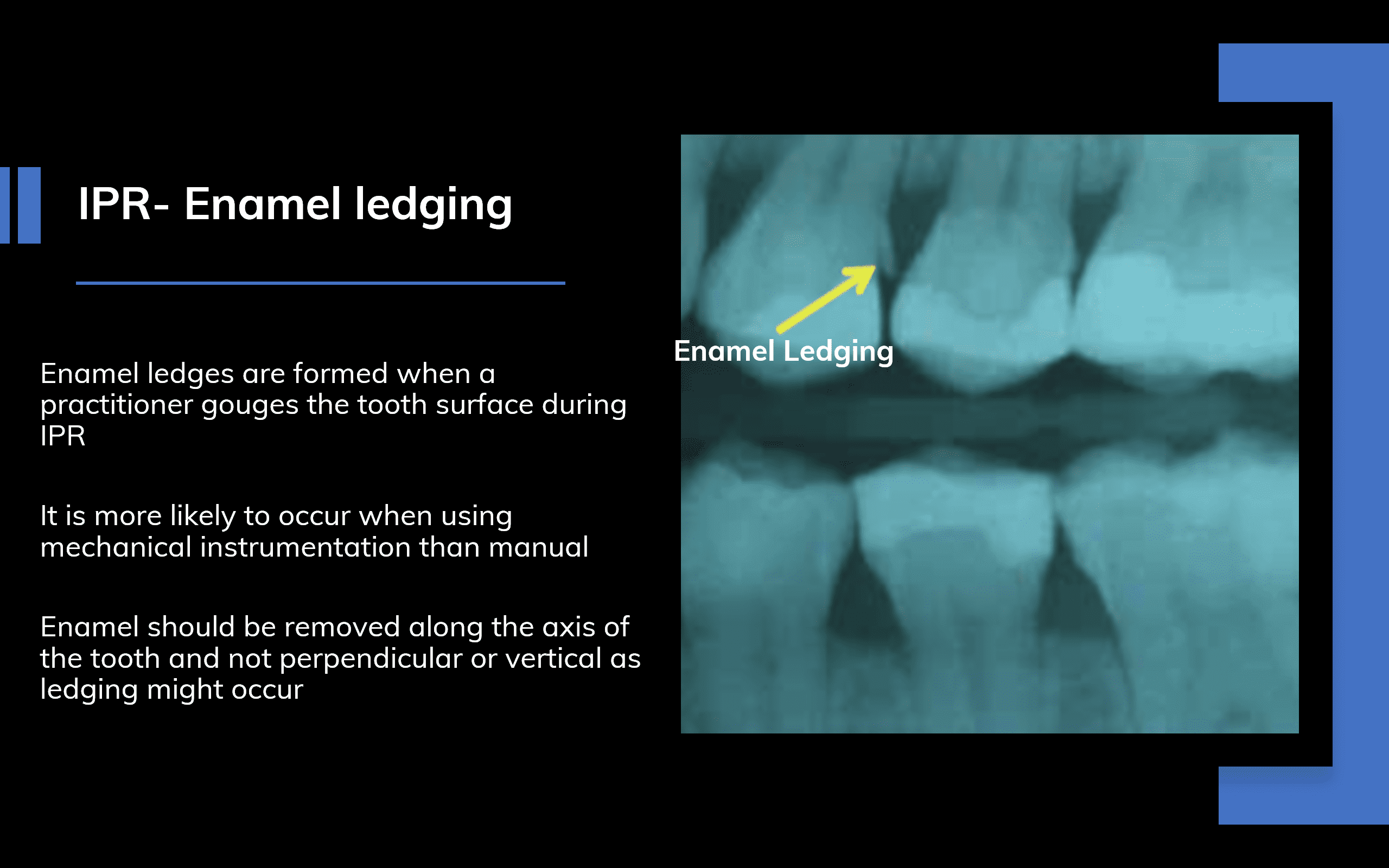 Slide 15Enamel ledging
 Slide 16Black triangles and poor contouring
 Slide 17Manual instrumentation
 Slide 18The IPR process, step by step
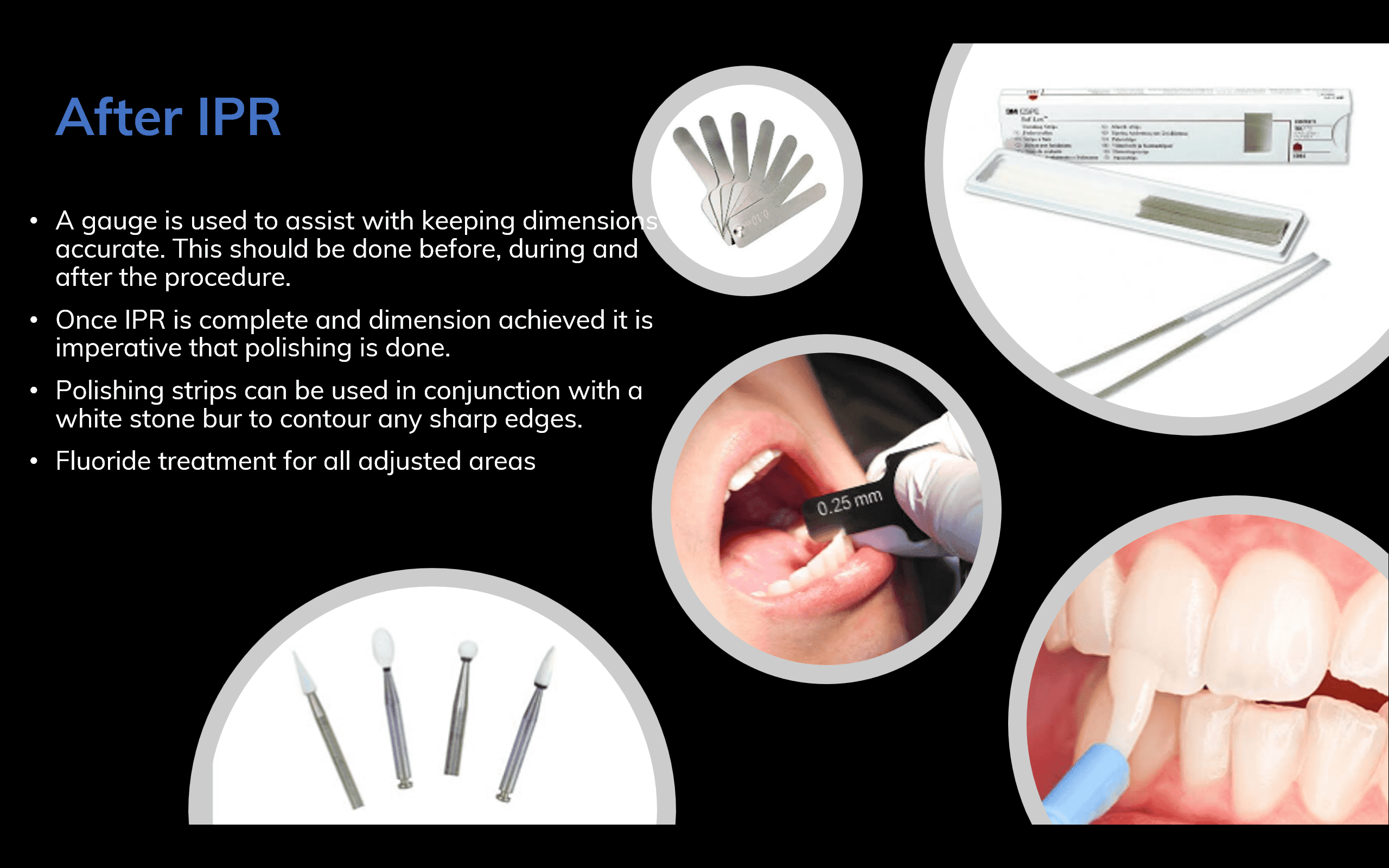 Slide 19After IPR: gauging, polishing and fluoride
 Slide 20IPR summary
 Slide 21IPR tips for success
Composite AttachmentsThe kit, the language to use with patients, and the bonding sequence. 5 slides.
 Slide 22Composite attachments: what you need
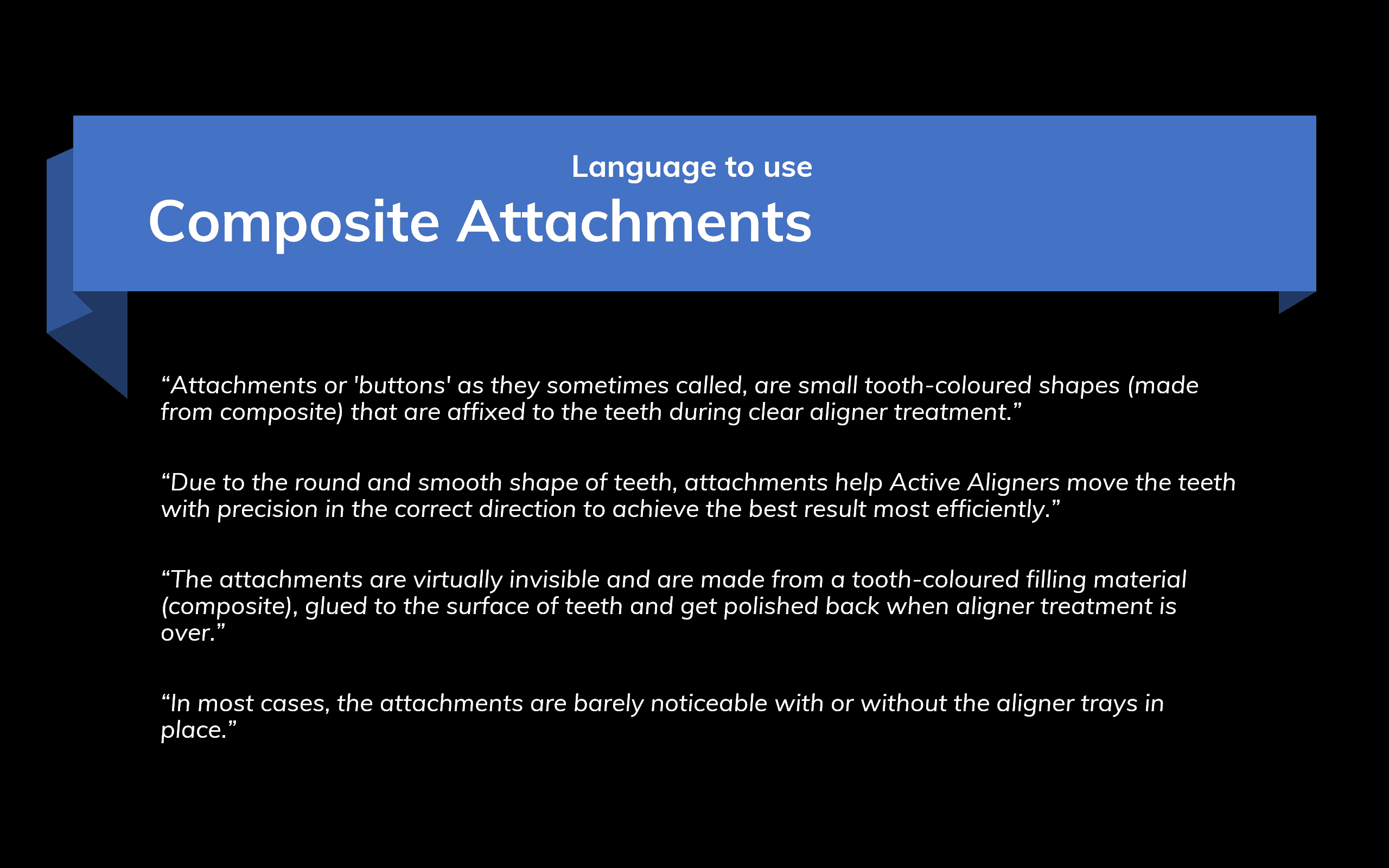 Slide 23Language to use with patients
 Slide 24How to attach, steps 1 to 4
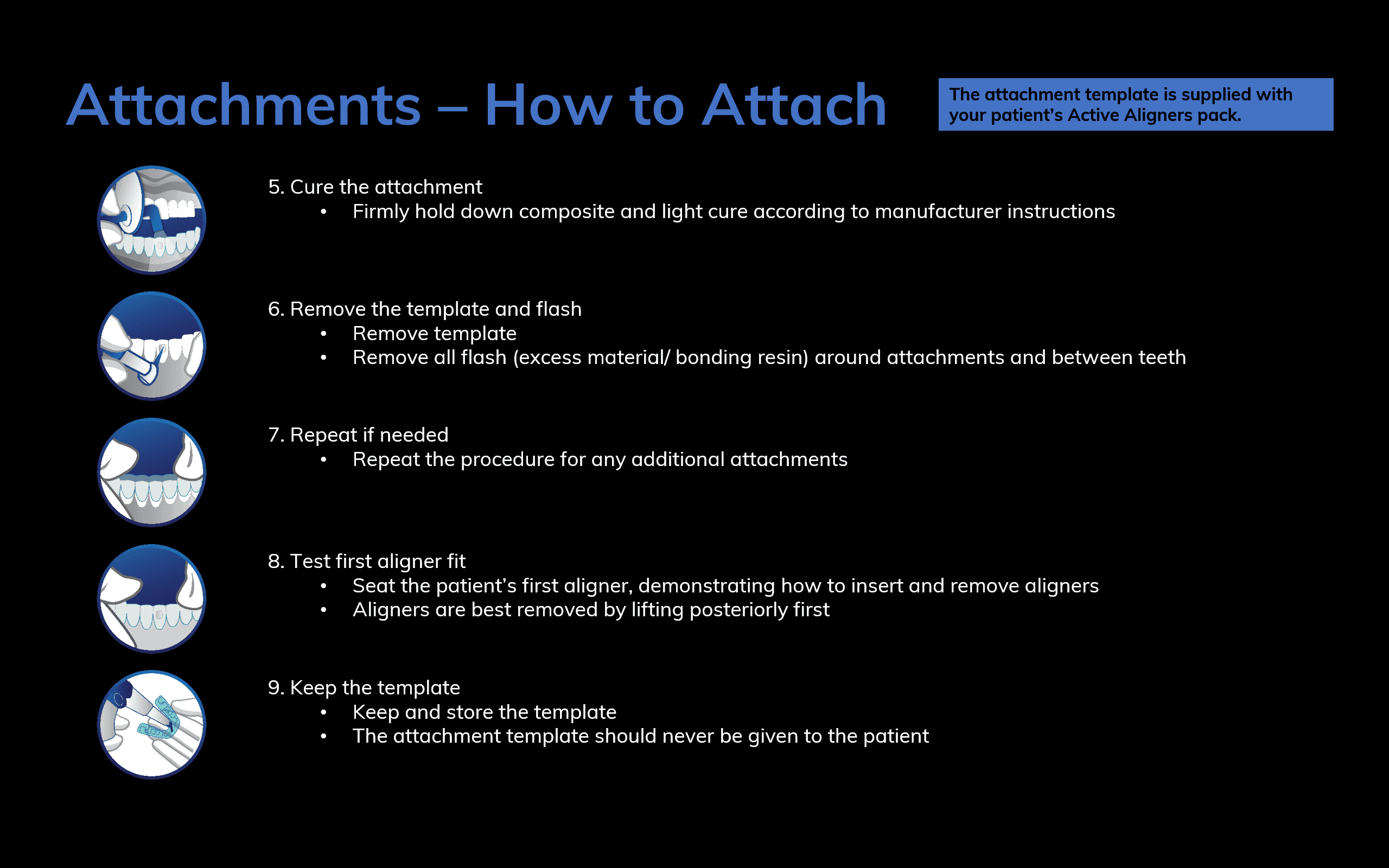 Slide 25How to attach, steps 5 to 9
 Slide 26Guidelines and precautions
Next step: the free Clinical Mentorship Programme
Enjoyed the accreditation course? The mentorship programme is where you put it into practice, with a clinician alongside you.
- Four recorded webinars with experienced clinicians, watch them whenever suits you
- A designated clinical mentor for 1:1 case advice
- Peer discussion in The Case Review Cafe, our WhatsApp group where providers post cases and talk them through together
- Build your confidence
- No case commitment
- Free access to the digital education platform
The four webinars
Clear aligners: what’s all the fuss about?
Key drivers for uptake, achieving a better smile, attracting clear aligner patients, staff motivation and the business case.
Case selection and clinical considerations
How to identify cases likely to succeed, which to avoid, compromised outcomes, IPR demystified and composite attachments.
Treatment process and the digital workflow
Running a case through the platform from first scan to final aligner.
Fitting, monitoring and troubleshooting
Fitting appointments, keeping a case on track, and what to do when it is not.
Ready for the next step?
The Clinical Mentorship Programme picks up where this course leaves off. It is free, there is no case commitment, and you get a named clinical mentor you can send real cases to before you treat anybody.